What Batteries Does a Baby Einstein Aquarium Take? Read the Toy, Not the Rumor
Posted on 2026-09-07 by Miriam Adler
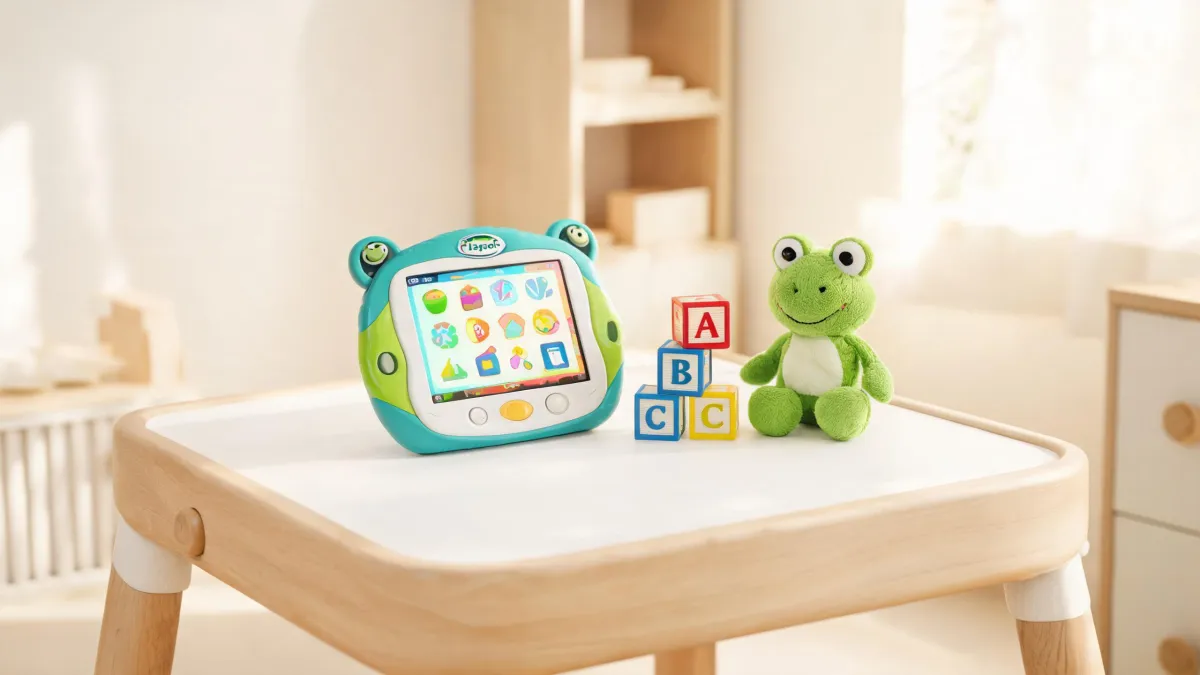
The Baby Einstein aquarium has no single battery answer. The brand includes many toys, and different versions can use different cells. So the reliable spec is not in a forum post; it is printed on your own unit. Open the battery door and read the underside of the cover, the wall of the bay, or the label on the old battery. Those marks tell you the exact size, voltage, and polarity in about two minutes.
Not so fast: no universal battery answer
One toy name, a dozen battery answers - that's the trap you just walked into. It's seven o'clock, your little one points at the aquarium, and the lights have gone dim. You slide the cover off, and the slots look like the forum posts don't agree. Someone says C, a relative swears by AA, and a listing from years ago hints at something else. You stand there holding the wrong pack, frozen between opinions. The toy's dim lights are the only honest voice in the room. The good news: the most reliable answer was never online. It is printed on the toy itself. Before you spend money, change the question. Stop asking which battery a Baby Einstein aquarium takes, and ask which aquarium you are holding. The name covers a family of products, not a single machine. Different versions can need different cells, and the only way to know for sure is to look at what's in front of you. That shift turns a guessing game into a two-minute errand.
No single battery for the brand - that part is easy to miss. Baby Einstein is not one toy in a box; it is an American franchise and product line that stretches across home videos, books, flash cards, toys, and baby gear, all aimed at infants and toddlers under three. That breadth explains the confusion. When a brand covers such different formats, each product is engineered on its own, with power needs set by its own lights, sounds, and circuit board. A video needs no battery; a plush toy may sip power; a musical water toy may draw more. Two aquariums from different years may be internally different, even if the outside shell looks the same. The change can be invisible, a redesigned board or a different supplier. None of this is meant to frustrate parents. Product lines evolve quickly, and each model's battery spec is chosen for that model's circuit, not for the whole brand. So when someone says 'all Baby Einstein aquariums take the same battery,' treat it as rumor, not fact. The only spec you can trust came with your exact unit, printed where you can find it.
Find the exact answer in two minutes
Two minutes is plenty - once you know the three places to look. The first question parents ask is, 'Okay, where exactly?' Start with the compartment cover you just opened; many manufacturers print or emboss the cell size and direction on its underside. Next, shine a light into the empty cavity. The walls or floor often carry a molded label with voltage and polarity. Finally, if the old battery is still in your hand, check its body; most cells show a size code and chemistry mark near one end. These spots stay readable long after the outside sticker wears off. If a mark is faded, tilt the toy or run a finger over it to feel the indentation. No manual and no internet are required; every clue is physical. If you still cannot decode it, keep the old cell, because it fits, which is one fact you already have.
Start with the shape and depth of the empty slot - the compartment is a physical template that does not lie. Slide a candidate cell in without forcing it; if it will not settle comfortably, the size is wrong. Then read the diagram printed near the terminals. Manufacturers usually show which end faces the spring and which end faces the flat plate, and many bays also state the voltage they were designed for. Compare that drawing to the cell's raised terminal before pushing anything into place. If the code points to a rechargeable chemistry, do not substitute unknown rechargeable cells; if it names disposable cells, do not mix brands or ages. When the old battery is present, check whether its own label repeats the information from the bay. Even a damaged label leaves the fit as a strong clue, but the polarity and voltage clues still matter. This inspection is quick enough to finish before your child asks for a second song. Most of the time the marking is fully visible. Take a photo before inserting the new cell, so you will not need to open the toy again next time.
Why the label beats hearsay
Parents on the forum are not lying; they are describing a different product. Why does the same model name produce so many battery answers? Because Baby Einstein has been made for years, by multiple manufacturers, and a single aquarium can be updated with different components without getting a new name. One production run may use one cell size, and a later run can switch because a supplier changed. When someone says AA worked, that parent may have an older version or a different revision. A message board cannot tell you which situation you are in. The motor, the LEDs, and the sound circuit are designed for a specific voltage window, and that design is fixed at the factory. So the only reliable source is the information on your own toy. Hearsay collects everyone's experience, averages it, and sells it as universal truth. Averages are exactly the wrong tool when you need a precise match for a single piece of equipment. Remember that the aquarium's name stayed the same even when its guts did not, so the label, not the legend, carries the real answer.
The decision rule is short: the label inside beats every rumor outside. Remember the brand itself: it is an American line of baby media and products for children under three. Such a wide range is possible only because each item differs from the next, and power supply is one of the differences. A stationary toy can run on minimal current; a toy that lights up and moves water needs a bigger source. There is no engineering reason all those products should share one battery type, and in practice they seldom do. That is why no forum post can give you a universal answer. The imprint inside your toy, placed there by the same engineers who designed the circuit, carries real authority. Once you trust that, the online noise becomes irrelevant. You verify your own compartment, match your own cell, and move on. This two-minute habit also prevents an extra store trip, protects the circuitry from an incorrect voltage, and saves you from redoing the search next time.
Install safely: polarity and voltage
Most battery failures are about the details, not the type: a flipped cell or a half-dead friend in the slot. Inside the bay, a simple diagram shows which end faces the spring and which end faces the flat contact. Spend three extra seconds matching that drawing before you push. A reversed cell can keep the toy dark, and a briefly reversed connection may make the terminal warm. The cure is visual: look at the diagram, then look at the battery. The raised nub is the positive terminal; the flat metallic end is negative, unless the bay says otherwise. Do the work over a table, not a carpet, so a dropped battery cannot roll under furniture and become a hazard. Those seconds of attention prevent the most common causes of a toy that 'suddenly stopped working.' Checking the diagram is faster than testing, so train yourself to treat that picture as the first step. Your baby may be impatient, but thirty seconds of care now saves an hour of troubleshooting later.
Voltage is the second guardian, because a cell can fit yet still be wrong. When the compartment asks for a particular voltage, supply that voltage; do not try a higher-rated cell hoping for more brightness. The toy's circuit was designed for a range, and going beyond it can shorten LED life or overheat the motor. Rechargeable cells deserve extra care: their usual voltage often differs from alkaline cells, so match the chemistry to the bay's request. Do not place a fresh cell next to a weak one; the strong one pushes current through the weak one, which speeds leakage and heat. Also avoid mixing chemistries in the same device, because their discharge curves diverge and the mismatch can stress one cell. If the toy will go unused for a long stretch, remove all batteries. Leaking fluid corrodes contacts even when the toy is off, and that corrosion is much harder to fix than simply inserting fresh cells. These rules apply to every battery-powered baby toy, and they boil down to a single habit: respect what the compartment prints.
The final rule: check, match, enjoy
The final rule is a two-minute habit with no paperwork: remove the cover, check the underside of the lid, look again inside the bay, and compare the old cell if it is still there. Notice that none of this depends on memorizing a fixed answer for the Baby Einstein aquarium, because that fixed answer does not exist. Your unit knows what it needs because the designers wrote it into the molding. If the toy is new, the manual agrees with the imprint, but manuals get lost; the imprint stays. If you have a hand-me-down with a faded label, the slot shape plus the polarity diagram still give you enough to choose safely. Let physical evidence lead, and you will not be the parent who buys the wrong size, races back to the store, and returns to a baby who has stopped watching the bubbles. That is the entire checklist, and it protects your time as much as your toy.
Check, match, enjoy - that is the whole method. Check what the compartment tells you before you buy. Match size, voltage, and polarity to that printed message. Then enjoy the glow while your baby watches the light. When a friend asks what batteries a Baby Einstein aquarium takes, answer honestly: it depends on the exact product, so look at the label. That is not a dodge; it is the most useful guidance you can give, and it will still be true years from now. The product line will keep changing, new versions will keep appearing, and the myth of one eternal battery answer will keep failing. But the habit of checking the compartment never becomes obsolete. Use it once, and you will have retired every future battery question for this toy; better yet, you can pass the same rule to a babysitter or grandparent in a single sentence: 'Read the imprint first.' The rule outlasts the toy's batteries.
When in doubt, let the imprint decide. The safest answer for your Baby Einstein aquarium is already inside the toy; all you have to do is look at it.

Miriam Adler
Miriam Adler is an educational and STEM toy analyst specializing in busy boards, Montessori-style manipulatives, learning towers, sound books, reading pens, pretend-play sets, and early learning toys. She applies ASTM F963 and IEC 62115 methods while evaluating small-part hazards, accessible edges, switch durability, sound output, battery access, pull force, and age-appropriate task complexity. Her work helps parents, retailers, and product teams choose learning products that align developmental goals, supervision needs, interaction design, and the intended age stage.