Leapfrog Maternity Ratings 2024: What Changed and How to Use Them
Posted on 2026-08-24 by Miriam Adler
-
Two Leapfrogs: One Sells Toys, the Other Rates Hospitals
-
What the Hospital Rating Actually Measures
-
2024's Quiet Shift in the Scoring Rubric
-
Breastfeeding Support Moves From Afterthought to Hard Metric
-
How to Read the 2024 List Without Misreading It
-
The Traps Hiding Behind a Top Rank
-
A Reusable Ruling for Your Hospital Choice
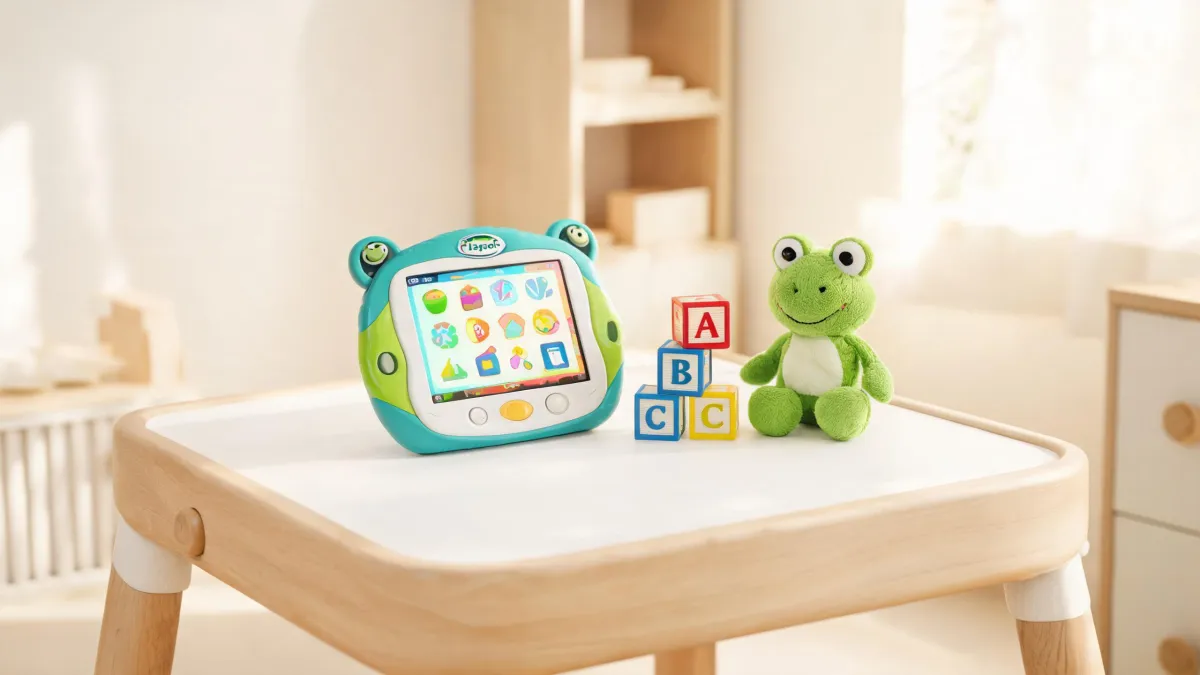
Five years ago, searching 'leapfrog best hospitals for maternity care' could drop you onto a toy store page whose carousel promised 'Scoop Up the Fun Now on Amazon' and a 'Scoop & Learn Ice Cream Parlor.' In 2024, the same search should surface a healthcare rating group that scores hospitals on maternity safety — and that group changed its scoring rules for this year. The gap between a talking toy and a hospital rating is not a typo; it's the reason every pre-2024 list should be treated as stale.
Two Leapfrogs: One Sells Toys, the Other Rates Hospitals
Why does the word 'leapfrog' pull in two opposite directions? The toy company Leapfrog dominates searches with pages for learning tablets, baby monitors, and toys grouped by age from 'Infant & Toddler (3-36 Months)' to '1st Grade + (6+ Years).' Meanwhile, a dictionary-style definition reminds you that leapfrog is also a children's game where one child vaults over another's stooped back. Neither of those helps a parent hunting for a maternity hospital. The word they actually need belongs to the Leapfrog Group, a nonprofit that evaluates hospitals on patient safety and publishes maternity care ratings. Knowing that distinction is the first filter for a reliable 2024 search, and it saves you from closing the tab in frustration. But even after you find the medical Leapfrog, you still have to learn what its score means, because the score is not a popularity contest. The rating uses a letter-grade style, but the number attached to each hospital is built from dozens of safety checks, many of which change every year. The next section looks directly at those checks.
The practical consequence of that name collision is that a family searching in a hurry may land on a toy page and assume the 'best hospitals' list is a marketing gimmick. They close the tab, or worse, they pick a hospital based on a different website with a prettier interface and no verifiable safety data. Once you know that the real Leapfrog is a rating organization, the next question is what, exactly, it inspects. The answer is not lobby chandeliers or private suites; it is the measurable machinery of safe birth: how often a hospital performs C-sections, how quickly it responds to emergencies, and whether its nurses can walk a new mother through the latest breastfeeding protocol. Those are the details that survive a standards update, and they are the subject of the sections ahead. A score, in other words, is a window onto process, not a badge of prestige. That distinction becomes critical in 2024 because the organization revised the weight given to these process measures, making some old winners drop down the list.
What the Hospital Rating Actually Measures
A hospital's Leapfrog score sounds like a single number, but what does it actually measure? At its core, the medical Leapfrog rating is an audit of preventable harm. It asks how the hospital prevents medication errors, whether it follows checklists during surgery, how well it handles infections, and for maternity care, whether its delivery practices match current evidence. The score is not a prize for reputation; it is a signal of how reliably the organization performs on safety checks. Because medical evidence shifts, the set of checks is revised every year, so the same hospital can rise or fall without changing a single doctor. That is why you need to know the 2024 edition of the rubric, not the 2023 one. In practice, a hospital that scores well has to show inspectors its protocols, training logs, and outcome data, rather than relying on a famous name. That audit-like nature is what separates the medical Leapfrog from a consumer satisfaction poll.
To see how those abstract checks become concrete, imagine two hospitals. One advertises a spa-like birth center with a private tub and a gourmet menu; the other has plain rooms but publishes a raw C-section rate and a breastfeeding support protocol built on the latest Centers for Disease Control and Prevention guidance. The Leapfrog-style rating does not reward the first hospital's décor. It rewards the second one for following evidence, because that is what predicts outcomes such as fewer surgical complications and fewer preventable readmissions. A high score therefore means a hospital has built its routines around measurable safety — not around marketing. That should set your expectations before you open any 2024 list. It also tells you which details to look for when you compare hospitals: published rates, protocol documents, and staff responses to questions about how they actually operate. If a hospital cannot produce those documents, the score itself should be treated as unverified.
2024's Quiet Shift in the Scoring Rubric
So, what exactly changed in 2024? The most visible shift is that patient experience and follow-up support moved from soft extras into scored categories. Consider breastfeeding guidance. A major children's hospital (Texas Children's) published a support guide noting that the CDC recently changed its recommendations on breast pump cleaning and safe milk storage. The guide points out that many mothers return to work, build a freezer stash, or pump exclusively, and each of those situations demands different storage rules. If a hospital's maternity floor still teaches the old 'rinse and air-dry' routine, it is out of step with the evidence. Under the updated rubric, that single detail drags down the hospital's maternity score. The change is not cosmetic; it is a concrete example of how standards get refreshed. And because the CDC update was published recently, hospitals have had little time to catch up, which makes the 2024 ratings a true test of institutional agility.
That single example reveals the larger mechanism of a standards update. When the CDC revises its dates or procedures, hospitals cannot simply print a new poster; they have to retrain nurses, replace informational brochures, change the cleaning supplies in pumping rooms, and adjust discharge instructions. If a hospital is slow to do that, its score falls even though its doctors and rooms are the same as last year. For a consumer, the implication is blunt: a 'best hospitals' list from last year is not a safe shortcut in 2024. You must read the current edition, because the scoring scale itself has moved. That is why every headline that says 'Leapfrog best hospitals for maternity care 2024' is really a warning to check the year before trusting the names. The same logic applies to any other indicator that depends on fresh clinical guidance, from medication protocols to newborn screening. Standards updates are not a one-time event; they are the mechanism through which ratings stay honest.
Breastfeeding Support Moves From Afterthought to Hard Metric
Among the maternity indicators, which one deserves your attention first in 2024? Breastfeeding support is a strong candidate, but only if you understand why it is scored. It is not a lifestyle checkbox; it is a measure of whether a hospital translates current evidence into daily practice. A mother who gives birth at a hospital unable to explain safe pump cleaning and milk storage is more likely to struggle with mastitis, to mix up storage times, or to give up breastfeeding earlier than she planned. Those outcomes affect both maternal and infant health, which is why recent rating changes treat breastfeeding support as a substantive, scored item rather than an optional amenity. The metric forces hospitals to prove that their education materials and nurse training match the latest medical advice. It also gives patients a concrete question to ask on a hospital tour.
The factual anchor for this measure sits in the Texas Children's guidance, which begins with a clear warning: the CDC recently changed its recommendations on pump cleaning and safe milk storage. The guide explains that the change is not arbitrary — it exists because the old advice was tied to outdated assumptions about bacterial growth. For a hospital, complying means teaching mothers concrete steps: wash hands before pumping, disassemble the pump kit after each use, scrub parts with a dedicated brush, rinse them, and store them in a clean, sealed container. If you ask a nurse at a prospective hospital how long breast milk can stay at room temperature and she answers with a pre-2024 rule, you have just uncovered a score gap. The same logic applies to other 'support' indicators: what matters is whether the hospital's actions track the cited evidence. This is the mechanism behind the 2024 change, not a vague gesture toward 'better patient experience.'
The caveat is that breastfeeding support should not be read in isolation. It is a weighted indicator, not an absolute verdict. For a low-risk parent planning a straightforward vaginal birth, it may be the single most useful number. For someone carrying twins, or with a history of preterm labor, or with placenta previa, the first filter has to be emergency capacity: a hospital with a high-level neonatal unit, rapid cesarean availability, and a maternal-fetal medicine team. The breastfeeding score becomes a tiebreaker, not a decision-maker. Conditions like these are why the scoring rubric insists that you map indicators to your own risk profile instead of averaging them into an anonymous score. That mapping is the core skill the 2024 update demands, and it is easy to miss if you only read the headline ranking.
How to Read the 2024 List Without Misreading It
Once you have the 2024 list in front of you, where should your eyes go? Most readers scan for the highest overall score, but a single aggregate number is the least informative field on the page. A hospital can earn a high total by excelling in surgical safety while lagging on maternity-specific items, or vice versa. The methodical read is to locate a hospital's name, then drill into the maternity sub-ratings: C-section rate, breastfeeding support, infection control, and emergency response. Only after you see those lines should you compare hospitals against your own needs. Treating the aggregate score as the verdict is like judging a car by its color rather than its brakes. In 2024, the important details are distributed across several categories, so a single letter is a starting point, not an endpoint. Write down the numbers for the categories that match your situation before you look at the total.
Reading the sub-ratings requires one more adjustment: you are looking at a snapshot, not a permanent label. Because the standards were updated for 2024, a hospital that was an 'A' in 2023 may now be a 'B' simply because the rubric changed around it. So your analysis should include the previous two years as a trend line. A steady climb in breastfeeding support tells you the hospital has actually absorbed the new CDC guidance; a flat or falling number suggests it is updating paper rather than practice. Apply that trend filter to the two or three indicators you most care about, and the noise of a single-year score disappears. That is how you turn a list into a decision tool. It also explains why you should always check the publication year on the page; an old snapshot from a different scoring era is worthless.
The Traps Hiding Behind a Top Rank
Why does a truly great score still not mean 'best for you'? Because every rating is built from averages, and averages are not people. The toy company that shares the Leapfrog name understands this well: its website groups products by age bands like 'Infant & Toddler (3-36 Months)', 'Preschool (3-5 Years)', and by price tiers '$5 and under', '$5 to $10', '$10 to $25'. No responsible parent buys a toy just because the site lists it under 'Best Sellers'; they pick the age band and the child's interest. A hospital rating works the same way. Even a hospital topping the maternity list may be fifty miles away, out of your insurance network, or weak in the exact complication you are most likely to face. A rank is a starting grid, not a prescription.
The traps go deeper if you do not correct for three habits. First, assuming a single hospital campus represents the entire system — many ratings are hospital-specific, and a flagship campus may outperform a satellite. Second, equating 'best overall maternity care' with 'best for high-risk pregnancy' — a center optimized for low-risk deliveries may transfer out prematurity cases rather than manage them. Third, treating a published score as proof of bedside performance; a rating is an audit snapshot, not a guarantee of what happens on a Tuesday night at 3 a.m. Each trap shares one root cause: using a group statistic to answer an individual question. The way out is to convert every score into a conditional: 'this hospital is excellent at X, and I need X, so it scores well for me.'
A Reusable Ruling for Your Hospital Choice
Can we compress all of this into a reusable rule for choosing a hospital in 2024? Yes, and it has three steps. First, confirm that the list you are reading comes from the medical Leapfrog Group and carries the 2024 valuation — not from the toy site, not from an older edition, and not from a magazine that reuses names without checking. Second, pull up the maternity detail for each candidate hospital and circle only the indicators that match your risk profile: for a low-risk pregnancy, look at C-section rate and breastfeeding support; for a high-risk one, look at emergency response, neonatal capability, and multidisciplinary team availability. Third, compare candidates by those circled numbers rather than by their total score, and prefer the hospital that has been improving on your chosen metrics across the latest two years.
That rule works because the 2024 update turned the rating from a vague reputation award into an audit of specific, checkable practices. It rewards hospitals that publish raw numbers on C-sections, infections, and breastfeeding support, and it punishes those that rely on marketing language. When you apply just those three steps, you are no longer at the mercy of a headline. You are back at the beginning of this article, where a parent once typed 'leapfrog best hospitals for maternity care 2024' and landed on a toy store. The name can still mislead, but the new rating system gives you a way to decide which Leapfrog you need: the toy company, the children's game, or the safety organization that tells you whether a hospital is actually fit for your birth plan.
In the end, the word 'Leapfrog' can point to a toy, a game, or a set of safety standards; for a 2024 maternity decision, only the third one tells you whether a hospital is ready for your birth plan.

Miriam Adler
Miriam Adler is an educational and STEM toy analyst specializing in busy boards, Montessori-style manipulatives, learning towers, sound books, reading pens, pretend-play sets, and early learning toys. She applies ASTM F963 and IEC 62115 methods while evaluating small-part hazards, accessible edges, switch durability, sound output, battery access, pull force, and age-appropriate task complexity. Her work helps parents, retailers, and product teams choose learning products that align developmental goals, supervision needs, interaction design, and the intended age stage.