Leapfrog vs. LeapFrog: Why Your Maternity Hospital Search Needs a Filter
Posted on 2026-08-26 by Miriam Adler
-
Leapfrog Names Two Very Different Organizations
-
LeapFrog's Product Lineup Spans Ages and Stages
-
Leapfrog Group's Role in Hospital Ratings—and What This Material Does Not Include
-
From Ratings to Care: A Breast Pumping Guide From Texas Children's
-
Three Key Topics in the Pumping Guide: Pump Choice, Cleaning, and Storage
-
Timeline of Relevant Standards Updates
-
Verdict: Choose Your Next Step Based on Your Goal
Searching for “leapfrog best hospitals for maternity care 2024” returns results from two very different worlds: Leapfrog Group, which grades hospital safety, and LeapFrog, the maker of educational toys. This article does not publish a hospital ranking. What it does offer is a clear split: if you want a rating, you need the Leapfrog Group's official site; if you want practical maternity-care guidance, the standards update here—new CDC recommendations on breast pump cleaning and storage, sourced from Texas Children's—gives you a concrete next step.
Leapfrog Names Two Very Different Organizations
Leapfrog carries two distinct meanings, and both are relevant to a search for maternity hospital rankings. According to Wikipedia, the word originally described a children's game in which players vault over each other's stooped backs; players take turns jumping over a partner who is bent forward, and the last one to move advances. The same entry explains that the term evolved into a verb meaning to advance directly from the rear of a line to the front, bypassing intermediate positions. That semantic bridge explains why the phrase “leapfrog best hospitals” can be read two ways. It might refer to the Leapfrog Group, a nonprofit that evaluates hospital safety and publishes grades, or to LeapFrog Enterprises, the educational toy company. Neither meaning is inherently medical, yet both surface in web queries because the words are identical. For a searcher expecting a ranking, the ambiguity is not trivial: it determines whether the results show hospital safety scores or talking toys. The Wikipedia definition therefore serves as a starting point, not an answer. The following sections dissect each entity in turn, then pivot to a care-related resource that can stand in for the missing rating data.
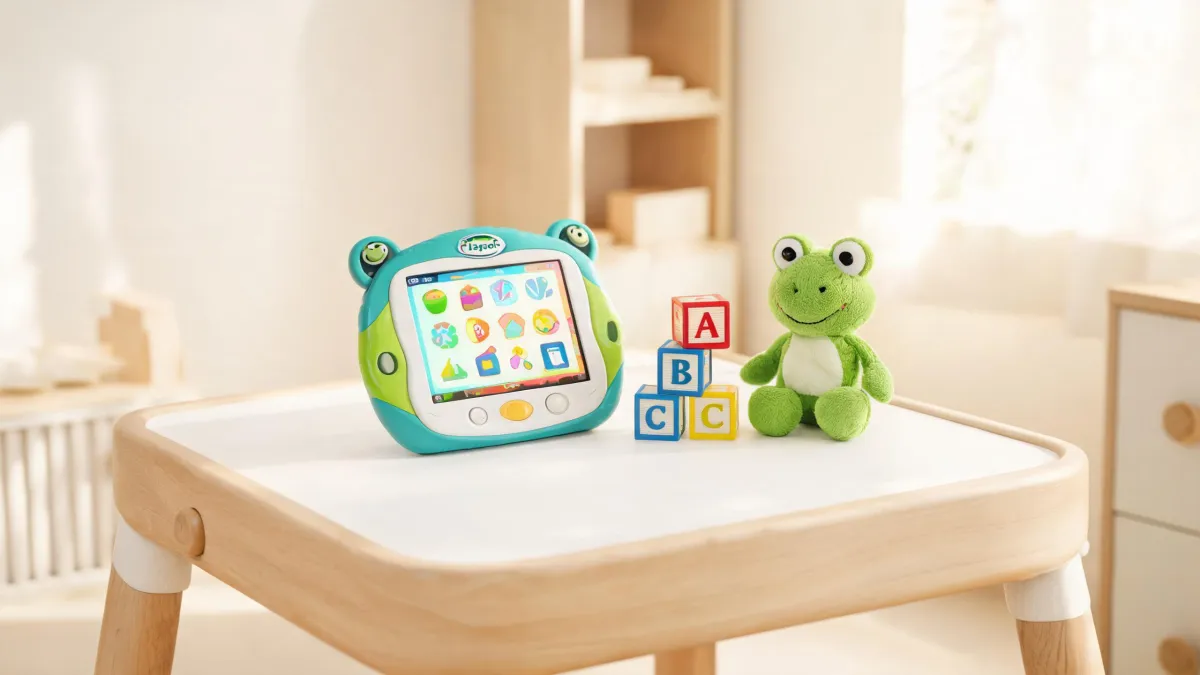
Casual browsing on the LeapFrog website makes the toy brand side of the query easy to identify. The homepage currently leads with a carousel promoting products like the Scoop & Learn Ice Cream Parlor, which says “Let's stack ice cream sky high!” when a child interacts with it. Other featured items include Mr. Pencil's Scribble & Write, which teaches letter sounds, and the 2-in-1 LeapTop Touch, which introduces vocabulary. The site also advertises LeapFrog Academy, a subscription learning system with 2,000+ activities, and invites visitors to start a 1-month free trial. Merchandise is grouped by age bands—Infant & Toddler (3-36 Months), Preschool (3-5 Years), Kindergarten (5-6 Years), and 1st Grade+ (6+ Years)—making the consumer-product focus unmistakable. For someone searching for hospital rankings, encountering this content is confusing. The brand name matches the search term, but the intent does not. This is the core conflict: the same string points to a for-profit toy maker and a nonprofit hospital-rating organization, and without a filter, search engines will display both.
LeapFrog's Product Lineup Spans Ages and Stages
The LeapFrog product map is broader than a single toy. According to the company's support page, its catalog spans tablets, reading systems, learning toys, baby monitors, and an app center. The homepage echoes this structure, with navigation categories for tablets and reading systems alongside deeper content such as the Academy Learning Path and skill areas like reading, writing, mathematics, logic, and science. In practice, a parent can pick a device for a child as young as six months and follow a path that extends into early grade school. The evidence from these pages shows an organized ecosystem rather than a random collection of plastic playthings. For a searcher evaluating whether a source is credible, the presence of structured age bands and skill categories is a signal that this is a curriculum-oriented business, not a medical authority. The distinction matters because the same name can lead to two very different trust assessments.
Age segmentation is a defining feature of LeapFrog's catalog. The legal and product pages list toys grouped into Infant (3-12 months), Toddler (1-3 yrs.), Preschool (3-4 yrs.), Pre-K (4-5 yrs.), Kindergarten (5-6 yrs.), and First Grade & Beyond (6+ yrs.). The same pages show learning systems like LeapStart and LeapReader, the latter rated for ages 4-8 years. This granular structure lets a parent match a product to a child's developmental stage, and it also makes the brand's educational philosophy visible. Each stage comes with specific skill targets, from early language to early math, so the products are designed to grow with the child. For shoppers, the age bands provide a quick compatibility check. For someone researching hospital quality, the same grouping is a reminder that LeapFrog is a consumer brand with a commercial motive, not a healthcare evaluator. The contrast sharpens the need to look beyond the search snippet.
Beyond individual toys, LeapFrog has built a connected learning system. The support page for product information lists offerings like LeapStart Preschool Success, LeapStart Learning Success, and the LeapReader 4-8 yrs., alongside learning tablets such as LeapPad Academy and LeapPad Ultimate. These devices share a common app store, where games, eBooks, and videos are organized by device and category. The Academy Learning Path, visible on the same pages, maps skills from reading and writing to logic and science, giving parents a roadmap that extends from six-month-old babies to eight-year-olds. What makes this relevant to the maternity query is that none of these products involve medical care. The system is education-focused, and its presence in search results for “best hospitals” is purely a naming collision. Recognizing that helps a searcher mentally delete toy-brand content and concentrate on the few results that actually address hospital quality.
Leapfrog Group's Role in Hospital Ratings—and What This Material Does Not Include
At this point, the honest limitation must be stated: the material gathered for this query does not include any Leapfrog hospital rating data. No list of top-ranked maternity hospitals, no safety scores, and no comparison by city or state appears in the source set. That absence is not an oversight; it reflects the fact that the search results were dominated by toy-brand pages and a single care-related article. For a reader who typed “leapfrog best hospitals for maternity care 2024” expecting a direct answer, the correct response is to say that no such ranking is available here. This material can, however, direct you to organizations that do publish such data, and it can provide a standards update that is directly relevant to maternity care even without a hospital list. The practical value lies in that redirect, not in pretending to have rankings that do not exist.
To find a true hospital rating, the most reliable path is to visit the Leapfrog Group's official website and use its hospital survey tools, which allow searches by location and measure across safety, quality, and patient experience. Alternatively, government-run platforms such as Medicare's Care Compare offer hospital comparison data, including maternity care measures where applicable. These sources are designed for the kind of query that seeded this article. The material you are reading now cannot replace them; it can only clarify the naming problem and supply a separate, care-oriented resource. If your goal is a ranking, bookmark the rating organizations. If your goal is practical guidance for postpartum care, keep reading, because the next section introduces a guide that, while not a rating, does address a standard that changed recently.
From Ratings to Care: A Breast Pumping Guide From Texas Children's
The pivot from ratings to care comes from a single evidence item: a guide titled “Guidelines for nursing mothers: How to safely pump and store breast milk,” published by Texas Children's. The guide is not a hospital ranking, but it addresses a specific maternity-care concern—breast milk pumping—with concrete instructions. Its presence in the search results for “leapfrog best hospitals for maternity care 2024” can be explained by the category-bridge mechanism: the query intends maternity care, and the guide supplies resources for a new mother. For a reader, the lesson is that a useful result does not have to be a list of hospitals; it can be a standard of care. The guide's authors begin by acknowledging the common struggle: whether you are returning to work, building a freezer supply, or are an exclusive pumper, choosing a pump and managing milk safely are real challenges. That framing instantly connects the material to the query's underlying concern.
The guide contains a notable standards update: the Centers for Disease Control and Prevention (CDC) changed its recommendations on breast pump cleaning and how to store breast milk safely for a newborn. This is the only explicit reference to a standard change in the entire evidence set, and it gives the article its update hook. The guide explains that the change is not about making life harder for mothers; washing hands and cleaning equipment has always been part of safe handling, but the revised guidance reflects newer evidence on contamination risks. For a parent evaluating a hospital, this matters because a facility's breastfeeding support should align with the latest CDC recommendations. The Texas Children's guide therefore becomes a practical screening tool: when you visit a maternity unit, you can ask how its pumping and storage protocols track the updated guidance. In this way, a document that says nothing about hospital grades still contributes to your decision-making.
Three Key Topics in the Pumping Guide: Pump Choice, Cleaning, and Storage
Within this guide, advice clusters around three main topics: pump selection, cleaning, and storage. On pump selection, the text acknowledges that deciding which pump to use is a common stumbling block for mothers. For cleaning, the CDC's updated recommendations provide the backbone, stressing careful washing of pump parts after each use. For storage, the guide walks through safe containers, refrigeration, and how long expressed milk can be kept. Each topic is presented as a concrete step rather than vague advice. The structure itself is useful: it tells a breastfeeding parent where to focus attention. For a reviewer, the topics also map onto the questions a maternity department should answer: What pumps are available? How are they cleaned? What storage guidance do nurses provide? A hospital that can answer those questions with current protocols is likely to support successful breastfeeding, which is a core part of postpartum care.
Read as a checklist, the guide's three topics become a practical takeaway. Before you choose a pump, consider your situation: returning to work, building a stash, or exclusive pumping each changes the best pump style. When you clean, follow the CDC's updated sequence—wash with soap and water, rinse, and air-dry on a clean surface—and know that extra steps such as regular sterilization may be needed for preterm or high-risk infants. For storage, use food-grade containers, label with the date, and follow the recommended fridge or freezer timelines. None of these steps ranks a hospital, but they let you evaluate whether a facility's breastfeeding support is up to date. If a maternity unit cannot explain its cleaning and storage policy, that gap is worth noting. The guide turns a vague concern about “good maternity care” into specific, assessable questions.
Timeline of Relevant Standards Updates
Putting the updates on a timeline makes the standard change concrete. The CDC's revised recommendations on breast pump cleaning and milk storage are the most recently dated item in the evidence set; the guide refers to them as a recent change. The page's metadata, including an image timestamp of 2026-03, suggests the content is current. For a mother or birthing person, this means the guidance you read from older sources may be out of date. Hand washing and basic hygiene have always been recommended, but the new protocol may alter how long pumped milk stays safe in the refrigerator or freezer. Because the CDC is a U.S. national authority, its guidance influences hospital policies and patient education materials nationwide. When you are comparing maternity services, asking when staff last reviewed the CDC's cleaning and storage rules is an easy way to gauge whether a unit is current.
On the brand side, the same search surfaces a date that acts as a schedule: LeapFrog's legal pages include a two-year limited Kid-Proof Warranty for tablets purchased after May 17th, 2017, and the footer carries a copyright spanning 2001-2026. That date range is a reminder that the toy company has been operating for decades, but it has no bearing on hospital standards. Including it on a timeline of relevant updates is a deliberate contrast: while the CDC changes affect clinical care, the LeapFrog dates affect product warranties and corporate history. For a searcher, separating these timelines is essential. A warranty date cannot tell you anything about maternity care, even though both appear when you use “leapfrog” as a keyword. The lesson is to check the domain and intent before trusting any date you find.
Verdict: Choose Your Next Step Based on Your Goal
The verdict on “leapfrog best hospitals for maternity care 2024” is that the query mixes two unrelated meanings and can only be answered after you split them. If your goal is a hospital rating, no rating data exists in this material; redirect to the Leapfrog Group's official survey or to Medicare's Care Compare. If your goal is practical maternity care, the Texas Children's pumping guide supplies a relevant, current standard update—the CDC's changed cleaning and storage recommendations. Those two paths lead to different destinations, and choosing the wrong one wastes time. The material's non-obvious judgment is that even a short care guide can be more actionable than a missing ranking: it gives you a way to evaluate a hospital's breastfeeding support, which is a concrete dimension of maternity care. The final decision rule follows.
To apply this rule: If your reason for searching was to identify the safest hospital, treat the absence of ranking data as the answer and go to a rating organization, using filters for your location and maternity services. If your reason was to prepare for postpartum nursing, accept that the Texas Children's guide is not a ranking but a usable standard: learn the CDC's current pump-cleaning and milk-storage steps, then ask a prospective hospital how its protocols align with them. If both reasons apply, do both in that order. The toy-brand results are a distraction, not a signal; after reading this, you can ignore them. The article's value is not in listing hospitals but in giving you a framework for deciding what you actually need next.
Ultimately, the right next step depends on your goal: for a hospital rating, use the Leapfrog Group's survey or Medicare's Care Compare; for postpartum care, follow the CDC's updated pump-cleaning and storage recommendations. Ignore the toy-brand noise.

Miriam Adler
Miriam Adler is an educational and STEM toy analyst specializing in busy boards, Montessori-style manipulatives, learning towers, sound books, reading pens, pretend-play sets, and early learning toys. She applies ASTM F963 and IEC 62115 methods while evaluating small-part hazards, accessible edges, switch durability, sound output, battery access, pull force, and age-appropriate task complexity. Her work helps parents, retailers, and product teams choose learning products that align developmental goals, supervision needs, interaction design, and the intended age stage.