LeapFrog Best Hospitals for Maternity Care 2024: The Real Search Result, Explained
Posted on 2026-08-18 by Miriam Adler
-
Searching 'Leapfrog Best Hospitals'? Here's What You Actually Get
-
Inside the LeapFrog Product Universe
-
2024 Maternity Care Update: The New Breast Milk Storage Guideline
-
A Timeline of LeapFrog-Approved Milestones (3 Months to Grade 1)
-
Getting Help: Manuals, FAQs, and Warranty Support
-
Privacy, Warranty, and What Parents Should Know
-
Final Verdict: Is LeapFrog a Hospital Rating Body?
Searching for 'leapfrog best hospitals for maternity care 2024' will not take you to a hospital rating list. Instead, the results introduce two different things: the children's game called leapfrog and LeapFrog, the education technology company. The game, as Wikipedia notes, is one where players vault over each other's stooped backs—a term that has also become a verb meaning to advance from the back of a line to the front. Nothing in that definition touches healthcare quality. LeapFrog, the brand, shares the name but none of the mission: it makes tablets, reading systems, and learning toys for children from infancy through early elementary school. So when you type that maternity-related query, you are landing in the world of educational play, not in the world of hospital safety scores. This article walks through LeapFrog's product universe, the 2024 maternity-adjacent content that surfaces in its ecosystem, and the boundaries to draw when comparing hospitals.
Searching 'Leapfrog Best Hospitals'? Here's What You Actually Get
Searching 'leapfrog best hospitals for maternity care 2024' does not return a list of hospital ratings. Instead, the results bring up the children's game called leapfrog and LeapFrog, the educational toy and technology brand. The game, per Wikipedia, involves players vaulting over each other's stooped backs, and the word has also become a verb meaning to move from the back of a line to the front. Nothing about that definition relates to healthcare quality. LeapFrog, the brand, makes tablets, reading systems, and learning toys for children from infancy through early elementary school. So when you type that maternity-related query, you end up in the world of educational play, not hospital safety scores. This article will walk through LeapFrog's product universe, the 2024 maternity-adjacent content that surfaces in its ecosystem, and the boundaries to draw when comparing hospitals.
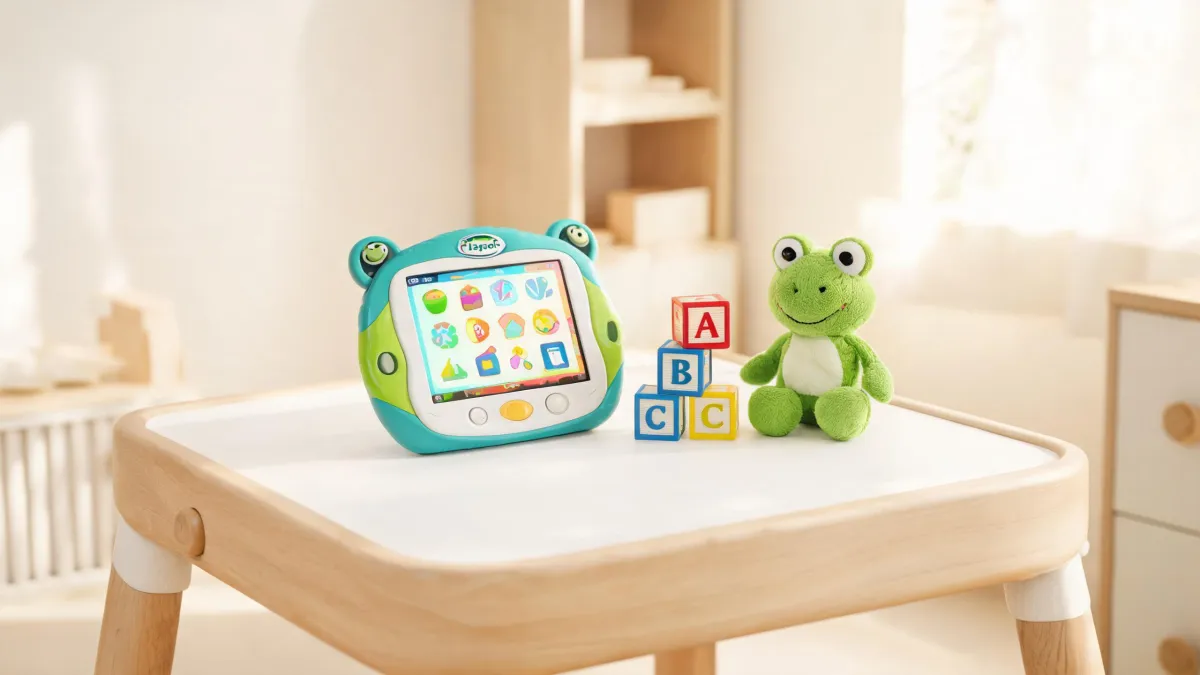
LeapFrog's website organizes everything by age. For infants and toddlers: 3 to 36 months; preschoolers: 3 to 5; kindergartners: 5 to 6; early elementary: 6 and older. Homepage best sellers include Scoop & Learn Ice Cream Parlor and Mr. Pencil's Scribble & Write, which teach counting and letter formation. The 2-in-1 LeapTop Touch teaches letters and sounds. The brand also runs LeapFrog Academy, a subscription service with more than 2,000 learning activities, and sells baby monitors, learning systems like LeapStart and LeapReader, and tablets like LeapPad Academy. These products are for educational growth, not hospital evaluation. Understanding this scope helps you use the brand correctly. This is why a maternity care search can land on a toy company: the brand's infant and toddler coverage overlaps with postpartum topics.
Inside the LeapFrog Product Universe
To understand what LeapFrog actually offers, look at its product families. The company groups learning toys by age: infant (3–12 months), toddler (1–3 years), preschool (3–4), pre-K (4–5), kindergarten (5–6), and first grade and beyond (6+). Beyond toys, LeapFrog sells learning systems, including the LeapStart series, which uses interactive books and styluses; the LeapReader, a reading and writing system for ages 4 to 8; and a range of tablets such as the LeapPad Academy and LeapPad Ultimate. For very young children, the brand also offers smart and video baby monitors. On the digital side, LeapFrog Academy provides a structured curriculum with activities that adapt to a child's progress, and an app center lets parents buy games, ebooks, and videos by device and price—with options at $5 and under, $5 to $10, and $10 to $25. This breadth shows why the brand appears in many parenting searches, but it also explains why none of its products measure hospital safety.
The age-stage mapping is explicit on LeapFrog's support and home pages. The learning path starts with Baby (6–11 months), then New Toddler (12–17 months), Toddler (18–23 months), Curious Twos (2 years), Preschool (3 years), Pre-K (4 years), Kindergarten (5 years), Grade 1 (6 years), and Grade 2–3 (7–8 years). Each stage comes with suggested skills: reading and writing, mathematics, logic and problem solving, science, social studies, creativity, and personal and social skills. For example, a Baby-stage child might use a soft rattle or a learning mirror, while a Grade 1 student might use a LeapStart or a LeapPad with more advanced games. The product line mirrors these milestones, so a parent can pick a toy that matches where their child is developmentally. This timeline is useful for parents planning educational purchases, but it tells you nothing about which hospital has the best C-section rate or lowest infection score. The distinction matters: child development is not healthcare quality.
2024 Maternity Care Update: The New Breast Milk Storage Guideline
Now for the interesting twist. Though LeapFrog has no hospital rating role, its broader content ecosystem can intersect with maternity care in unexpected ways. A 'category bridge' mechanism in the search results links the 'leapfrog' query to an article from Texas Children's Hospital titled 'Guidelines for nursing mothers: How to safely pump and store breast milk.' The article notes that the Centers for Disease Control and Prevention (CDC) recently changed its recommendations on breast pump cleaning and safe breast milk storage. Why does this appear under a LeapFrog search? Because the brand's educational content covers infant care, and maternity-related queries often drag in adjacent parenting topics. The practical result is that a parent searching for hospital ratings might instead find a useful nursing guideline. This is not a rating of any maternity ward, but it is a credible piece of care information that can help a new mother store milk safely.
The mechanism behind the guideline is worth unpacking. The Texas Children's piece explains that the CDC's updated advice is not about making life harder for mothers; rather, it addresses the risk of bacterial contamination. It walks through topics like which pump to use, how to clean pump parts, and how to store expressed milk. While the excerpt does not list exact storage times or temperatures, the article's purpose is to give nursing mothers a concrete routine for handling milk safely—something that matters when a mother returns to work or builds a freezer stash. The appearance of this content in a LeapFrog-related search likely stems from the brand's focus on infant and toddler stages, which overlaps with the postpartum period. For a parent, the takeaway is that you can sometimes find valuable care guidance even when the search engine's intent seems mismatched. But you should not mistake a breastfeeding guide for a hospital rating.
A Timeline of LeapFrog-Approved Milestones (3 Months to Grade 1)
LeapFrog structures its entire product line around a timeline of developmental milestones. On its homepage, the company lists a learning path that runs from baby (6–11 months) through grade 1 (6 years), and even into grade 2–3 (7–8 years). For each stage, LeapFrog suggests specific skills and product types. A baby might start with a high-contrast toy or a simple musical rattle; a toddler might use a shapes sorter; a preschooler might begin with a LeapStart interactive book; a kindergartner might graduate to a LeapPad tablet. This timeline is not just a marketing tool—it reflects a deliberate pedagogical sequence that aligns with early-childhood development research. The same path appears in the brand's support pages, confirming that the age bands are consistent across the product line.
Concrete evidence of this timeline appears on LeapFrog's support page, where the ages and stages section runs from Baby (6–11 months) to Grade 2–3 (7–8 years). For each stage, the brand lists skills such as reading and writing, mathematics, logic, science, and creativity. For example, the 'Pre-K (4 years)' stage focuses on early phonics and number concepts, while 'Grade 1 (6 years)' targets independent reading and simple math operations. The product line maps directly to this: the LeapStart Preschool Success system is aimed at ages 2–7, the LeapReader at 4–8, and the LeapPad Academy tablet for ages 3–9. Even the company's legal page repeats the same age bands—infant (3–12 months), toddler (1–3 years), preschool (3–4), pre-K (4–5), kindergarten (5–6), and first grade and beyond (6+). That consistency means a parent can rely on the brand's own categorization when choosing a toy.
Getting Help: Manuals, FAQs, and Warranty Support
When a LeapFrog product breaks or needs a manual, the brand provides a full support center. On its support page, you'll find a list of popular instruction manuals in PDF form, including the Magic Adventures Telescope, On-the-Go Story Pal, Magic Adventures Globe, RockIt Twist, LeapPad Academy, LeapPad Ultimate, LeapFrog Epic Academy, LeapFrog Epic, LeapStart Go, LeapStart 3D, LeapStart, LeapStory, and LeapTV. There is also a 'Support by Product' search that lets you pull up the exact manual for your device. For troubleshooting, the site includes a substantial FAQ section covering topics like how to cancel a LeapFrog Academy subscription, what to do if a LeapStart is not recognized by a computer, how to find a forgotten parent lock code, and whether you can buy replacement parts. The support center also includes warranty details and contact options.
The FAQ section offers a glimpse of the common issues families face. One popular question asks how to cancel a LeapFrog Academy subscription, which suggests that parents sometimes need to manage ongoing costs. Another asks why a LeapStart is not recognized by a computer, pointing to driver or connection issues that can be resolved by reinstalling the LeapFrog Connect software. A third question about a forgotten parent lock code shows that the brand builds parental controls into its devices. There is also a practical query about missing parts—'I'm missing parts from my LeapFrog Toy, can I buy parts from LeapFrog?'—with an answer that directs users to the support team. The FAQ also covers factory resets for LeapPad tablets and common error messages on the Magic Adventures Globe.
Privacy, Warranty, and What Parents Should Know
On the legal front, LeapFrog publishes a range of policies that parents should review. Its legal page includes the LeapFrog Terms of Use, Software License Agreement, Privacy Policy, Cookie Policy, and California Transparency in Supply Chains Act Disclosure, all available in English, French, and Spanish. Importantly, the privacy policy notes that LeapFrog may share information with its corporate parent, VTech, and provides a link to the VTech Privacy Policy for European Economic Area residents. The company also addresses children's privacy directly: a section called 'Smart Toys and You' includes a video explaining how products are designed to safeguard children's personal information and protect them online. For parents, this transparency is helpful—you know what data is collected and how it's handled.
LeapFrog's warranty terms are equally specific. The company offers a United States/Canada Limited Hardware Warranty, a two-year limited Kid-Proof Warranty for LeapPad Ultimate, LeapFrog Epic, and LeapFrog Epic Academy tablets purchased after May 17, 2017, and similar limited warranties for Ireland, the UK, France, Australia, and New Zealand. There are also distributor warranties for international buyers. These documents spell out what is covered—defects in materials and workmanship—and what is not, such as damage from misuse or normal wear. For a parent, the warranty is a practical consideration when buying a tablet meant for a child who may drop it.
Final Verdict: Is LeapFrog a Hospital Rating Body?
So, is LeapFrog a hospital rating body? No. The final verdict is unambiguous: LeapFrog is an educational toy and technology company, and its name—while identical to the phrase in the search query—has no connection to hospital safety scores or maternity care ratings. The confusion arises because the brand's content intersects with parenting topics, including a 2024-relevant guideline on breast milk storage that surfaced through a category bridge. That guideline, published by Texas Children's Hospital and aligned with CDC recommendations, is genuinely useful for nursing mothers. But it is a piece of clinical advice, not an evaluation of which hospital to choose. The brand's own website, support pages, and legal documents consistently describe its mission as educational play; nowhere does it claim to rate hospitals.
The boundary condition is simple: if your goal is to compare hospitals for maternity care, you need to look elsewhere. The LeapFrog brand cannot tell you about C-section rates, maternal complication ratios, or patient satisfaction scores. What it can do is provide trustworthy consumer education—including guidance on safe milk storage that may be relevant in your postpartum planning. To get hospital ratings, you should turn to organizations that specialize in healthcare quality measurement, such as state health departments or independent hospital rating programs. Always check the source's domain and credentials before treating any information as a hospital rating.
So, when you search 'leapfrog best hospitals for maternity care 2024,' remember: the LeapFrog brand will give you educational toys and, occasionally, a useful nursing guideline—but never a hospital score. For that, you need a different kind of Leapfrog.

Miriam Adler
Miriam Adler is an educational and STEM toy analyst specializing in busy boards, Montessori-style manipulatives, learning towers, sound books, reading pens, pretend-play sets, and early learning toys. She applies ASTM F963 and IEC 62115 methods while evaluating small-part hazards, accessible edges, switch durability, sound output, battery access, pull force, and age-appropriate task complexity. Her work helps parents, retailers, and product teams choose learning products that align developmental goals, supervision needs, interaction design, and the intended age stage.